
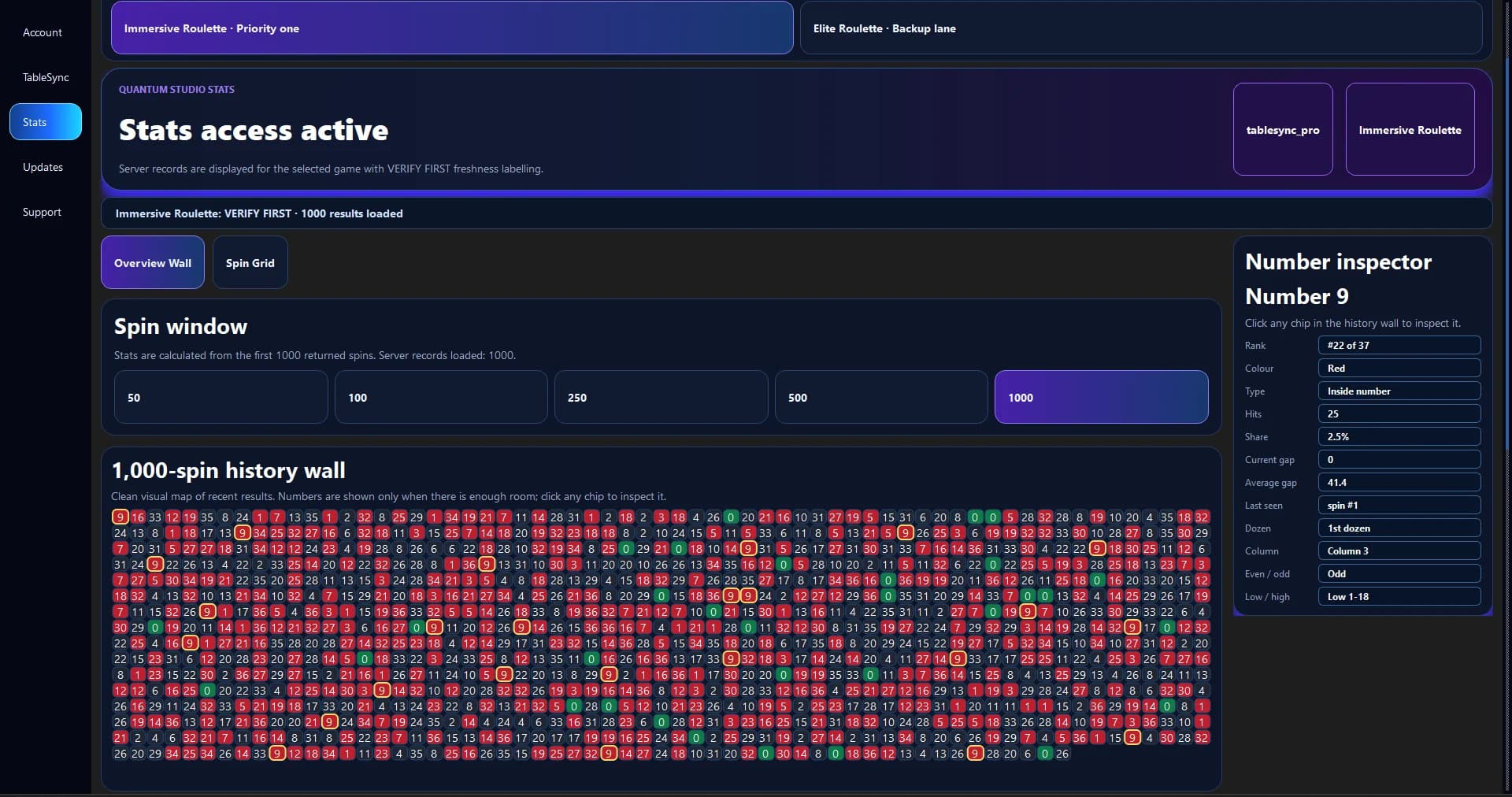
Start with the simple version
The main idea is to learn what the past can explain and what it cannot decide. Keep the first attempt small enough that you can explain what every click or number means.
You do not need a complicated system to learn this part of the product. Start from a known point, make one deliberate change and give yourself time to see the result.
Try it in a clear order
Begin by checking which session and history window are selected. Then describe the recorded results before deciding what they mean.
For roulette wheel history is not a forecast, use a short practice run and repeat the same opening steps. Repetition makes the controls easier to remember and makes later comparison more honest.
What to watch
Counts, gaps, colours and groups all depend on the sample in view. Change the sample and the picture may change as well.
If the screen no longer matches the session you intended to run, pause and reset. A clean restart is usually more valuable than trying to rescue a muddled practice run.
A common mistake
The biggest mistake is turning a description of the past into a promise about the next spin.
Keep the language factual. Describe the placement, balance, selected history or product state you can see instead of turning it into a claim about a future random result.
Bring it back to TableSync
TableSync organises recorded history so it is easier to review while keeping the selected context visible.
Use this idea to learn what the past can explain and what it cannot decide, then finish with one sentence about what you would keep or change next time. That small review is what turns a click-through into useful practice.
TableSync helps you practise the workflow and review recorded information. It does not change roulette odds, place real bets or make the next random result certain.